
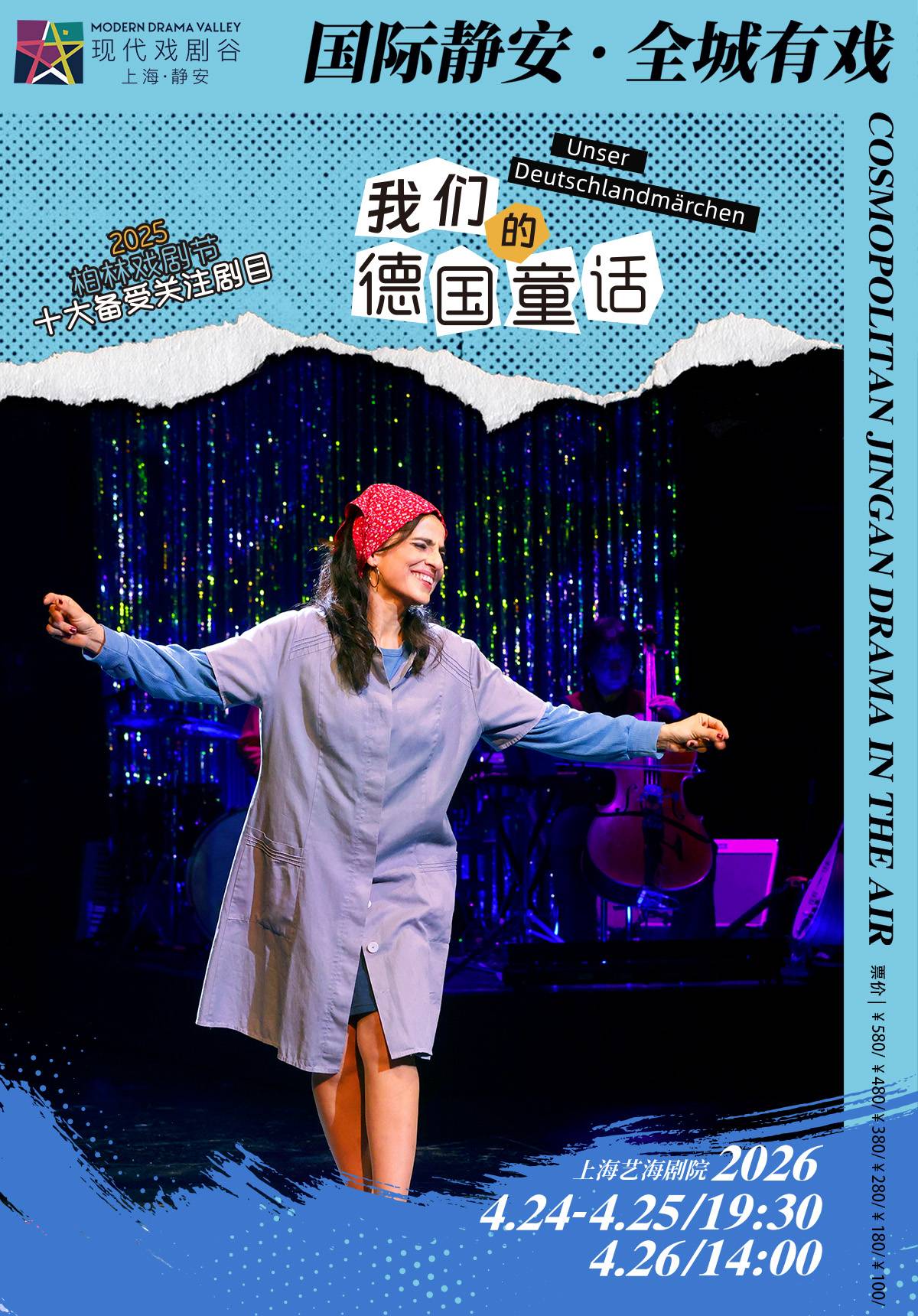
Unser Deutschlandmärchen
Venue:
FANCL Arts Center Grand Theatre
No. 466, Jiangning Road, Jiangning Road Street Jing'an Shanghai
Date:
4/24/2026 - 4/26/2026
Choose Session:
Unser Deutschlandmärchen
4/24/2026 - 4/26/2026
FANCL Arts Center Grand Theatre
No. 466, Jiangning Road, Jiangning Road Street Jing'an Shanghai
¥180 - ¥580
Event details
👉 E-tickets will be sent via SMS/Wechat; admission is granted upon presentation of the e-ticket
👉 Children over 1.2 metres in height require an adult ticket for entry. Children under 1.2 metres in height are not permitted entry
👉 No cancellation
Top Ten Most Anticipated Productions at the 2025 Berlin Theatre Festival
Winner of the 2023 Leipzig Book Fair Annual Literary Prize
When Turkish Folk Meets Western Pop Music
Gorki Theatre Presents a Musical Journey
Through the Lives of a Turkish Immigrant Mother and Son
Pondering the Question: "Where is Homeland?"
Winner of the 2023 Leipzig Book Fair Annual Literary Prize
When Turkish Folk Meets Western Pop Music
Gorki Theatre Presents a Musical Journey
Through the Lives of a Turkish Immigrant Mother and Son
Pondering the Question: "Where is Homeland?"
“There is no such thing as an absolute homeland, only a relative sense of belonging. This work is dedicated to every soul seeking their true self in a foreign land.”
- Hakan Savaş Mican, Director
- Hakan Savaş Mican, Director
“A courageous artistic expression, using music and the body to give immigrant stories a resonance that transcends language.”
- Berlin Theatre Festival Jury
“Unser Deutschlandmärchen is not only a play, but also a mirror reflecting contemporary society.”
- Theatre Weekly of German
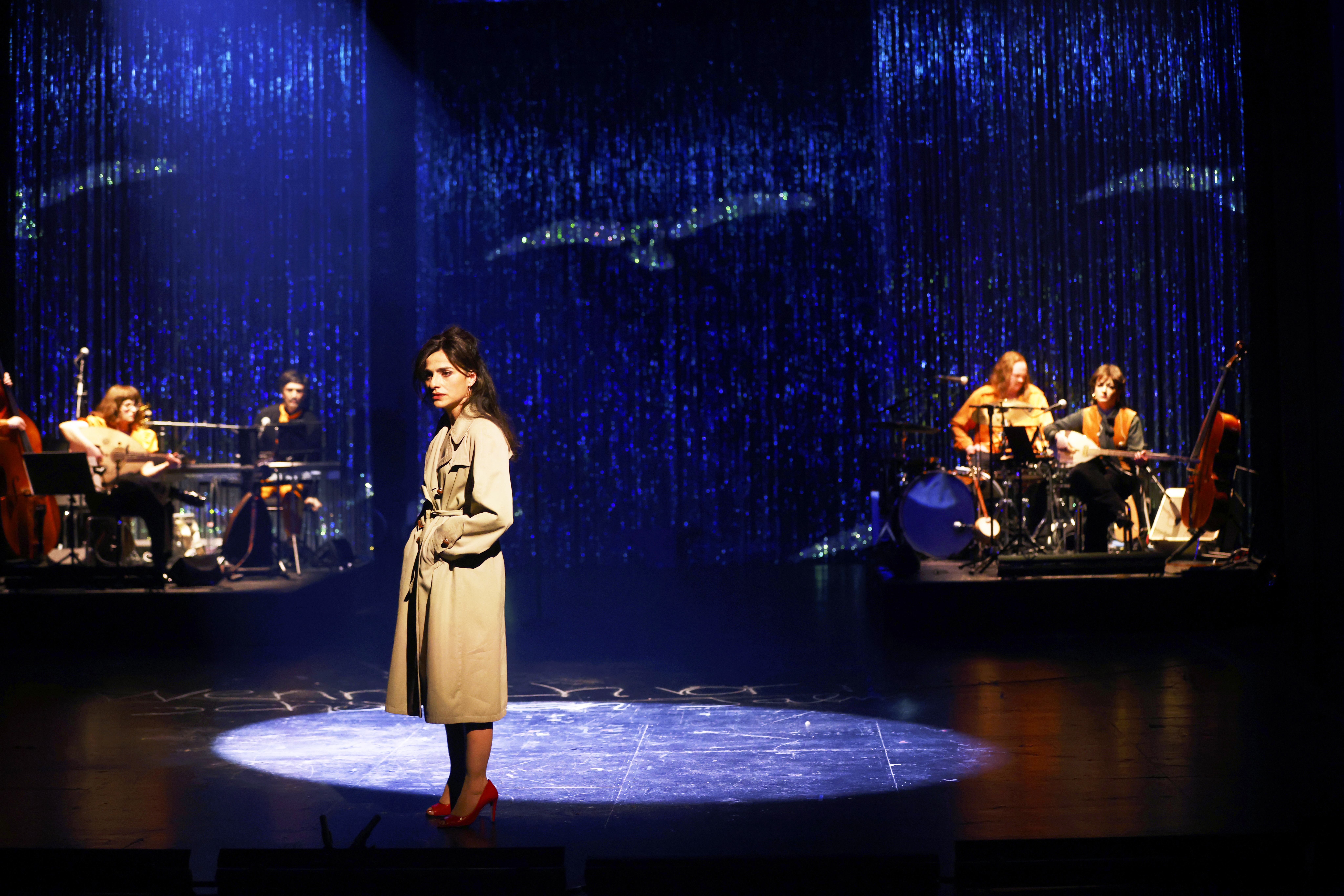
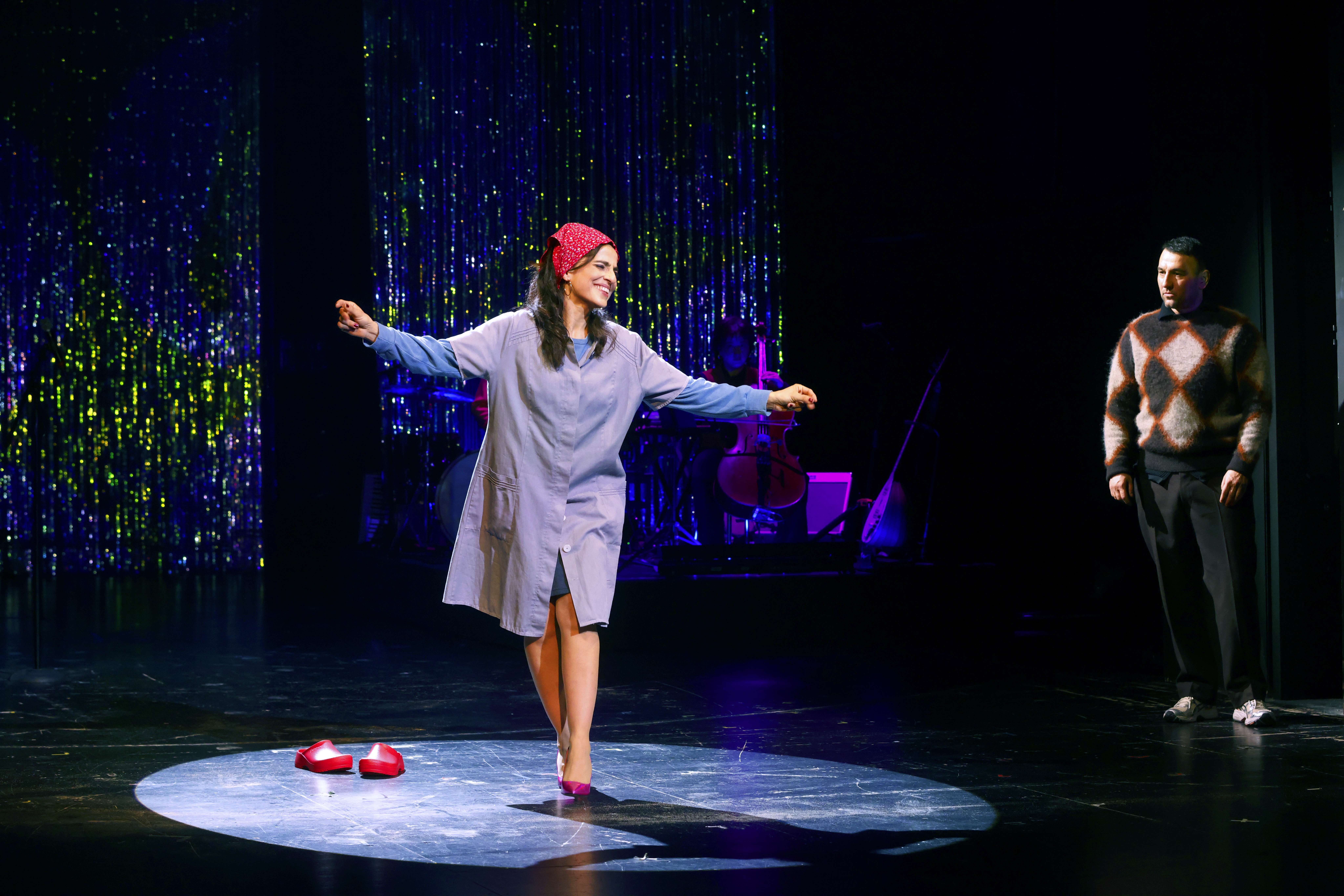
Fatma and Dinçer, mother and son, revisit their shared life through German style fairy tale which is far from a fairy tale. In their quest for identity recognition, linguistic expression and space to live, they sometimes stand shoulder to shoulder, sometimes clash head-on, perpetually torn between profound affection and fierce confrontation.
A five-piece band performs live
Interwine Turkish folk with Western pop
As the lights come up and the melody begins
Where lies the place of homeland?
Interwine Turkish folk with Western pop
As the lights come up and the melody begins
Where lies the place of homeland?
Hakan Savaş Mican
Born in West Berlin in 1978 to Turkish immigrant parents, he spent his childhood in Turkey with his grandmother. He completed his Turkish secondary school leaving examinations in Ankara in 1995 before returning to Berlin in 1997. He first obtained a degree in architecture in 2004, subsequently studying film directing at the German Film and Television Academy Berlin (DFFB). This interdisciplinary background profoundly shaped his stage aesthetics and narrative style. In 2013, he joined Berlin's Maxim Gorki Theatre as resident director, collaborating with Shermin Langhoff and Jens Hillje to advance the concept of "post-migration theatre". Concurrently working as a playwright, he authored multiple scripts reflecting immigrant experiences and urban life.
As a second-generation Turkish-German immigrant artist, Mican's work centres on themes of identity, cultural conflict, and immigrant integration, using personal narratives to illuminate social realities. He excels at blending cinematic language with theatrical artistry, incorporating multimedia, live music, and architecturally conceived spatial design into his storytelling to create immersive cross-cultural experiences. His productions frequently employ bilingual German and Turkish dialogue with supplementary subtitles, embodying the principle of "theatre for all".
Maxim Gorki Theater
The Maxim Gorki Theatre in Berlin is situated in the Mitte district. Originally a concert hall built in 1827, it was renamed and restructured in 1952. Since 2013, the theatre has adopted "post-migration theatre" as its core concept, focusing on social issues such as immigrant integration and identity formation. By blending multicultural performance forms with multilingual narratives, it transcends traditional theatrical boundaries, establishing itself as Berlin's pioneering hub for intercultural arts. A regular participant in the Berlin Theatre Festival, its productions tour major inter
Notice
Date:
Friday, 24th Apr. - Saturday, 25th Apr. @ 19:30
Sunday, 26th Apr. @ 14:00
Price: 180/280/380/480/580
Duration: 110 mins (with no intermission)
Language: German, with Chinese and English subtitles
Follow our WeChat for event news, deals, gossip and more!
Book Now
Unser Deutschlandmärchen
Venue:
FANCL Arts Center Grand Theatre
No. 466, Jiangning Road, Jiangning Road Street Jing'an Shanghai
Date:
4/24/2026 - 4/26/2026
Choose Session:
© 247tickets 2020 沪ICP备19024898号-2

 Add us on WeChat to speak to our friendly customer service team! ID: love247tickets