
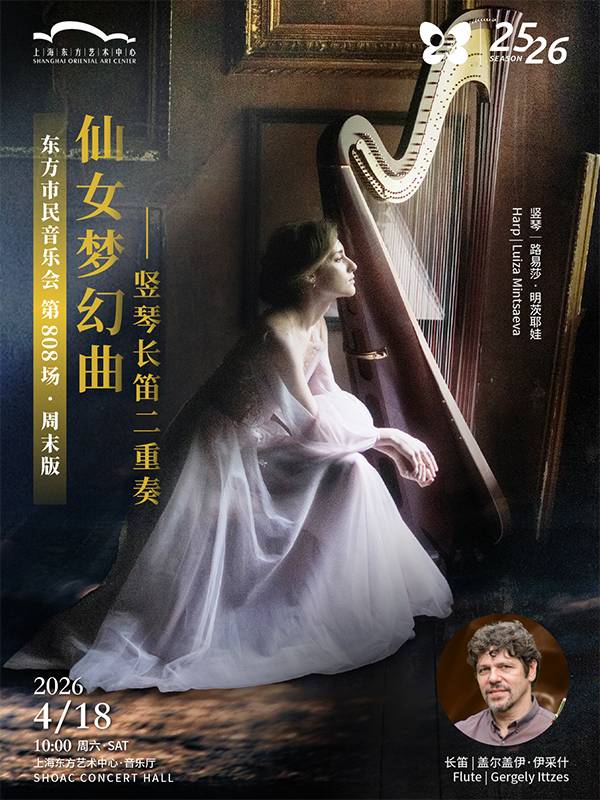
Harp and Flute Duo Concert: Luiza Mintsaeva & Gergely Ittzes
Venue:
Shanghai Oriental Art Center - Oriental Concert Hall
425 Dingxiang Road Pudong Shanghai
Date:
4/18/2026
This ticket is only available as a paper ticket
Harp and Flute Duo Concert: Luiza Mintsaeva & Gergely Ittzes
4/18/2026
Shanghai Oriental Art Center - Oriental Concert Hall
425 Dingxiang Road Pudong Shanghai
¥50 - ¥80
Paper ticket
Event details
👉 Receive Tickets via Express Delivery in 7 Working Days
👉 Children Under 1m Are Not Allowed to Enter
👉 All Attendees Require a Ticket
👉 No Cancellation
Harp | Luiza Mintsaeva
Flute | Gergely Ittzes
Program
Debussy | Clair de Lune
Jean-Michel Damase | Sicilienne variee
Scarlatti | Sonata in C Minor, K. 99
Henriette Renie | Légende
Prokofiev | Montagues and Capulets from Romeo and Juliet
Ernő von Dohnányi | Passacaglia, Op. 48, No. 2
Paganini | Selections from 24 Capriccios (arranged for flute solo)
Debussy | Rêverie
Saint-Saëns | Fantaisie, Op.124
Piazzolla | Histoire du Tango
I. Bordel 1900
II. Cafe 1930
III. Night club
IV. Concert D'Aujourd'hui
*Program is subject to change
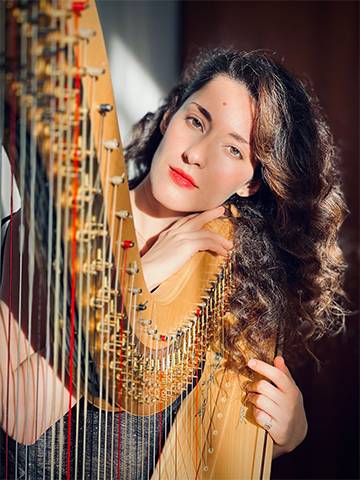
Luiza Mintsaeva
She was born in Moscow in the family of an opera singer, soloist of the Bolshoi Theatre of Russia. She started studying music at the age of four, trying different directions, and chose the harp at the age of nine. In 2014, Luisa Mintsaeva graduated from the Chopin Moscow State College of Musical Performance (harp class of the People’s Artist of Russia, Professor Emilia Moskvitina), and later the Tchaikovsky Moscow State Conservatory (in 2019 — the major course, in 2022 — an assistant internship, the class of Professor Emilia Moskvitina, academic research in the field of Musical Psychology — the class of Professor Marina Starcheus).
She is the laureate of international competitions, including the Concerto Virtuoso International Competition (First Prize, Moscow, 2018), the 9th Savshinsky International Competition (St Petersburg, 2018), the 19th International Harp Competition in Israel (Akko, 2015) and many others.
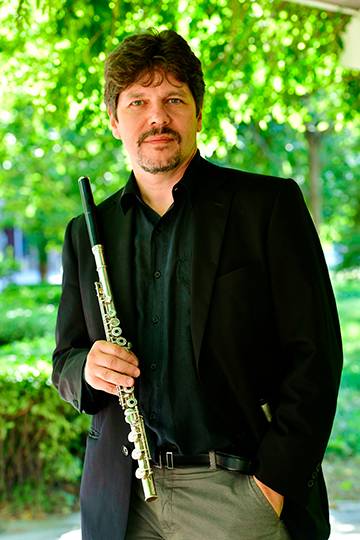
Gergely Ittzes
Born in Hungary (1969) and a graduate of the Budapest Liszt Academy of Music, GERGELY ITTZÉS is one of the most proactive personalities of the flute scene. While being a researcher of his instrument and composer of many experimental flute works applying the most up-to-date flute techniques, especially polyphonic playing, he does not specialize in contemporary music only but tries to connect it with tradition.
His large repertoire includes all the important works written for his instrument and a great number of rarities from the past centuries and today. In addition to classical and modern music, several other styles have also influenced his musical idiom, like jazz, ethnic music, and free improvisation.
Notice
Date: Saturday, 18th Apr. @ 10:00
Price: 50/80
Follow our WeChat for event news, deals, gossip and more!
Book Now
Harp and Flute Duo Concert: Luiza Mintsaeva & Gergely Ittzes
Venue:
Shanghai Oriental Art Center - Oriental Concert Hall
425 Dingxiang Road Pudong Shanghai
Date:
4/18/2026
This ticket is only available as a paper ticket
© 247tickets 2020 沪ICP备19024898号-2

 Add us on WeChat to speak to our friendly customer service team! ID: love247tickets