Program Introduction
Martha Graham Dance Company is not just a dance company; it is the starting point of modern dance, a national treasure of American art, and a legendary symbol named “Dancer of the Century” by Time magazine.
In 1926, Martha Graham founded the company in New York. Critics defined it outright: “American modern dance was born on this day.” The Graham technique she created—contraction and release—elevated modern dance from “emotional expression” to a complete system comparable to ballet. It influenced a generation of masters such as Pina Bausch and Lin Hwai-min, and giants including Merce Cunningham and Paul Taylor emerged from her school.
2026 marks the centenary of Martha Graham Dance Company (GRAHAM100). The company will launch a year-long centennial celebration through tours, exhibitions, documentaries, world premieres of new works, and more. After a hundred years, this company still stands at the forefront of modern dance: it safeguards Graham’s classics while continuing to invite leading choreographers worldwide to create new works, allowing a century-old craft to keep bursting forth in the contemporary era.
Programs
Program I 2026/11/21
Dark Meadow Suite
Immigrant
We the People
Appalachian Spring
Program II 2026/11/22
Night Journey
Lamentation Variations
To the Brink and Back
Chronicle
*Programs are subject to change.
【Program Notes】
Dark Meadow Suite (1946/2016)
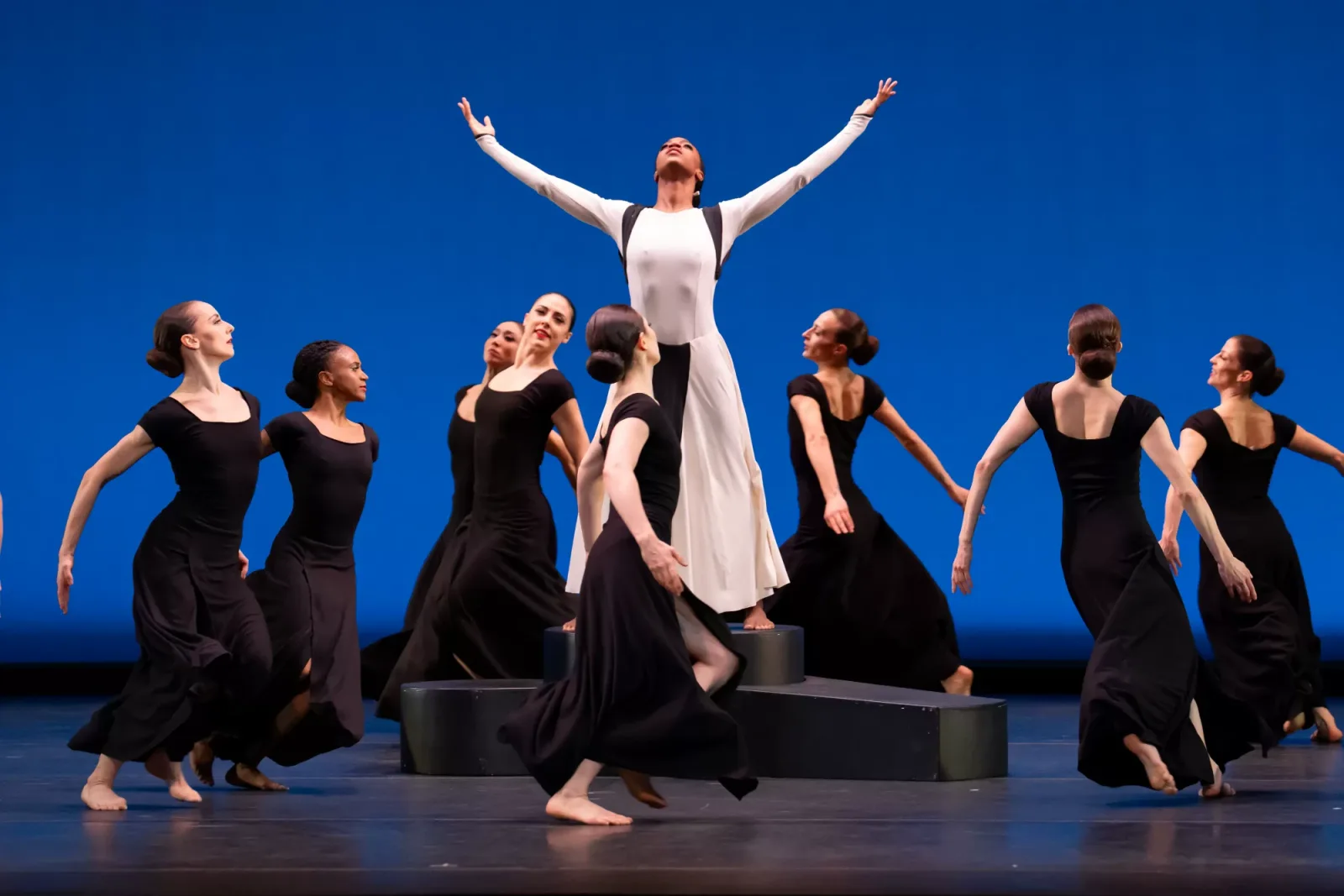
This work is drawn from Martha Graham’s large-scale dance work Dark Meadow, premiered in 1946. The suite version was created in 2016 to focus on the most representative group-dance sections of the original, showcasing Graham’s outstanding choreographic art for an ensemble of dancers. The unison dancing and duet work in this work are widely regarded as among Graham’s most architectural, ritualistic, and spiritually profound creations. Mexican composer Carlos Chávez wrote expansive, spatially resonant music for the work. Dancers often create a contrapuntal relationship with the score through the rhythms produced by their footsteps and body percussion.
Immigrant (1928)
Martha Graham’s 1928 solo Immigrant is lost. Virginie Mécène drew inspiration from an early photograph from Graham’s career and, based on her profound understanding of Graham’s artistic system, developed a completely new interpretation. Starting from the pose in the photograph, Mécène developed a series of movements that seem to be “excavated” from within the body—a creative process quite similar to Graham’s own. As a result, this solo remains faithful to Graham’s dance language and style while retaining the contemporary choreographer’s individual voice.
We the People (2023)
We the People is thoroughly 21st-century American in flavor. With a new score created by Rhiannon Giddens and arranged by Gabe Witcher, it presents the historical resonance of American folk music. Jamar Roberts’s choreography is strikingly contemporary and modern, forming a sharp contrast with the music. The choreographer has said: “Set to traditional American music, We the People reveals a strong contrast through the energetic, modern choreography of young dancers.”
Appalachian Spring (1944)
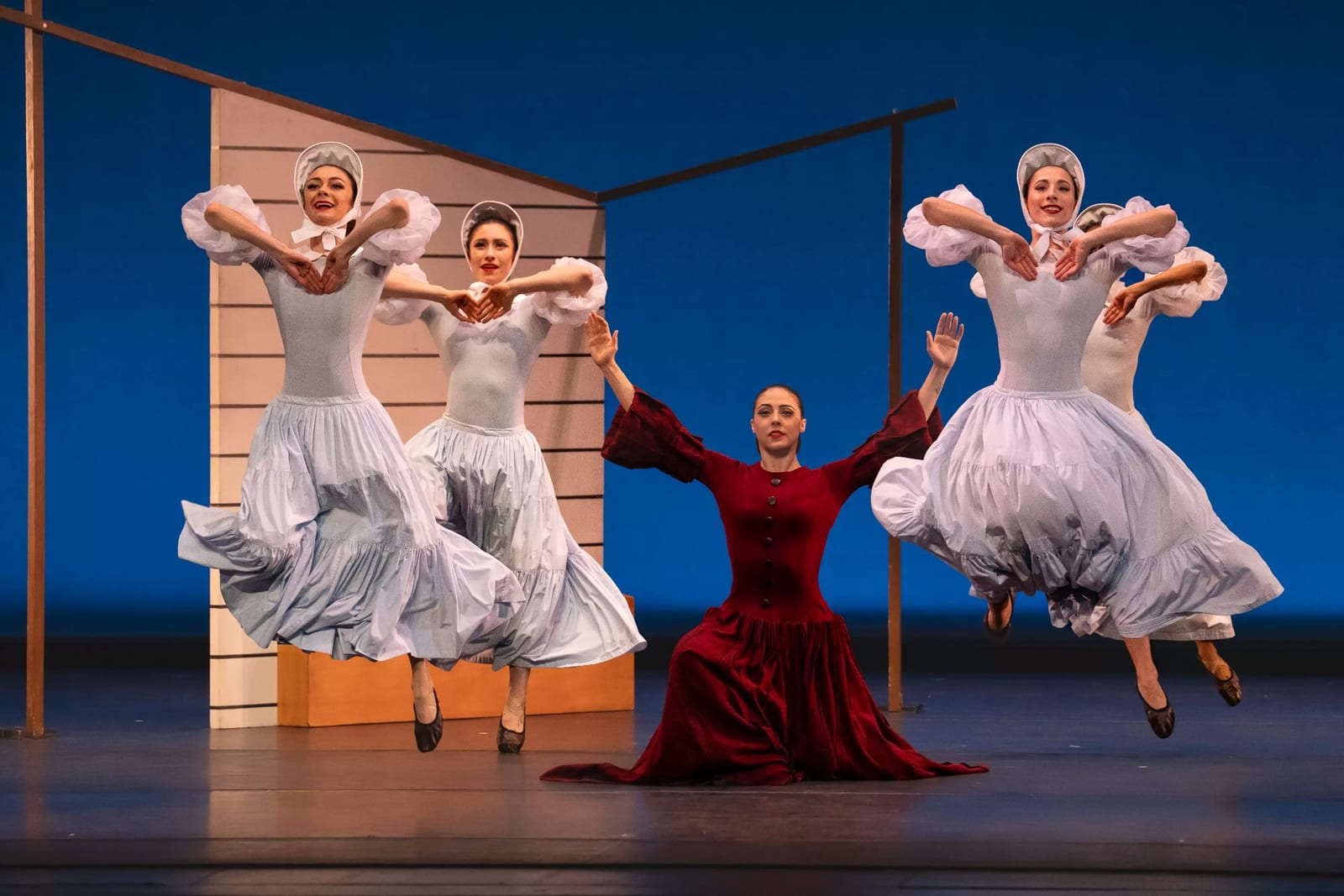
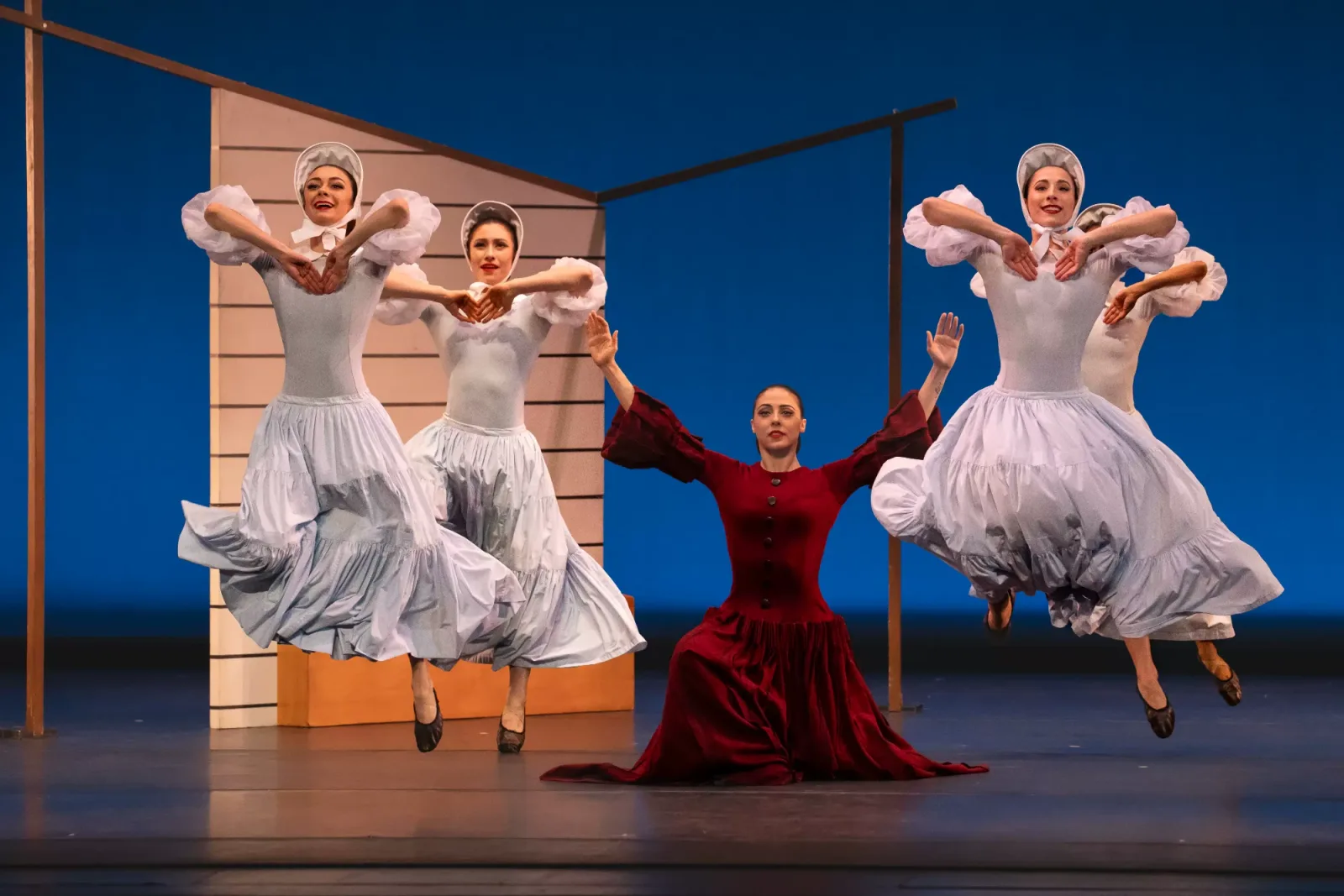
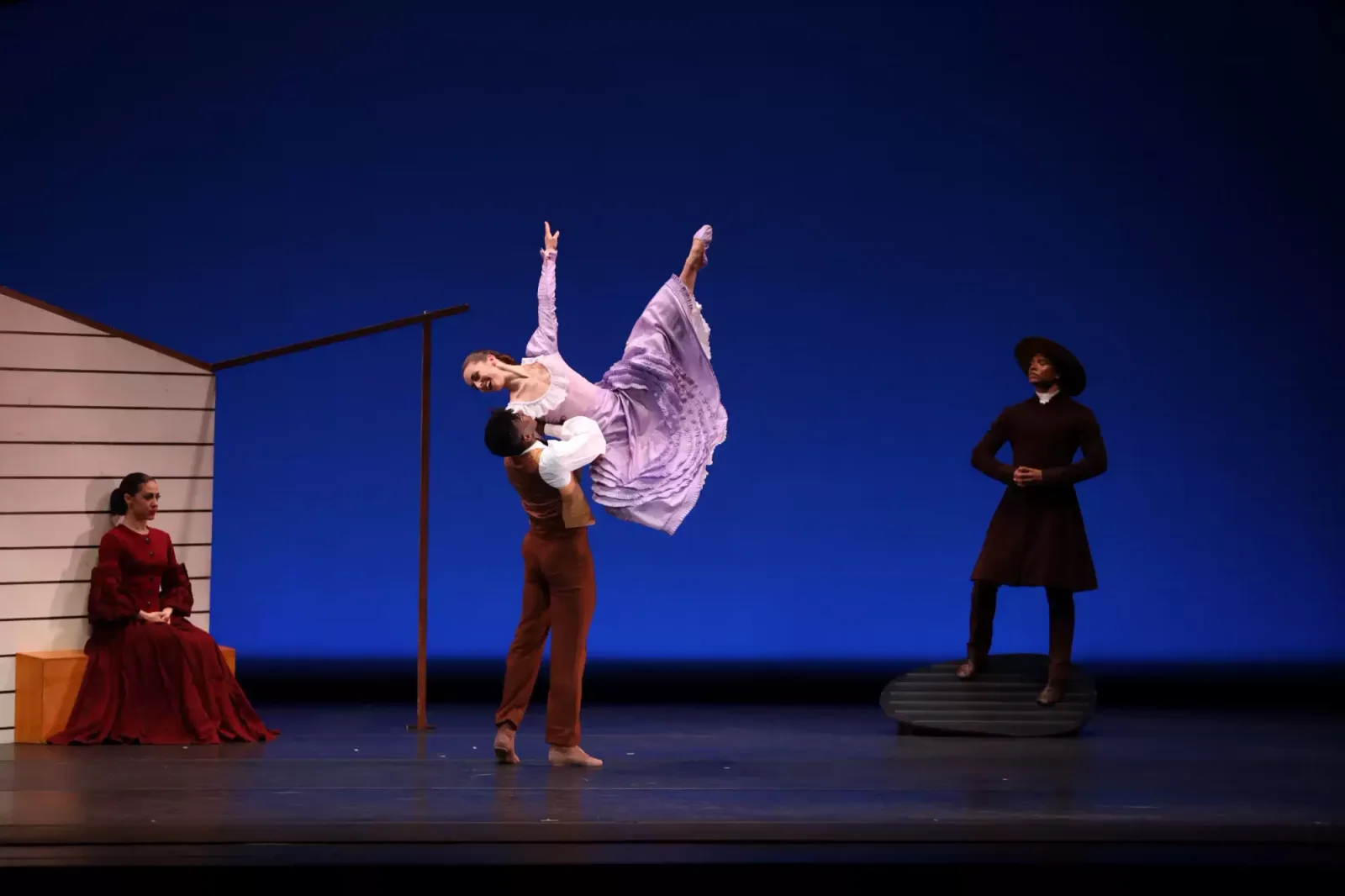
In 1942, Martha Graham was commissioned by the Elizabeth Sprague Coolidge Foundation to create a new ballet planned for its premiere at the Library of Congress. Aaron Copland was responsible for the score. Graham named the new dance work after Hart Crane’s line “Appalachian Spring.” Appalachian Spring led people to believe that the future would be more prosperous and that the world could be united again. With its simple story of new life in a new land, the work embodies hope. Critics called Appalachian Spring “bright and joyous” and “a simple and beautiful testament to the human spirit.”
Night Journey (1947)
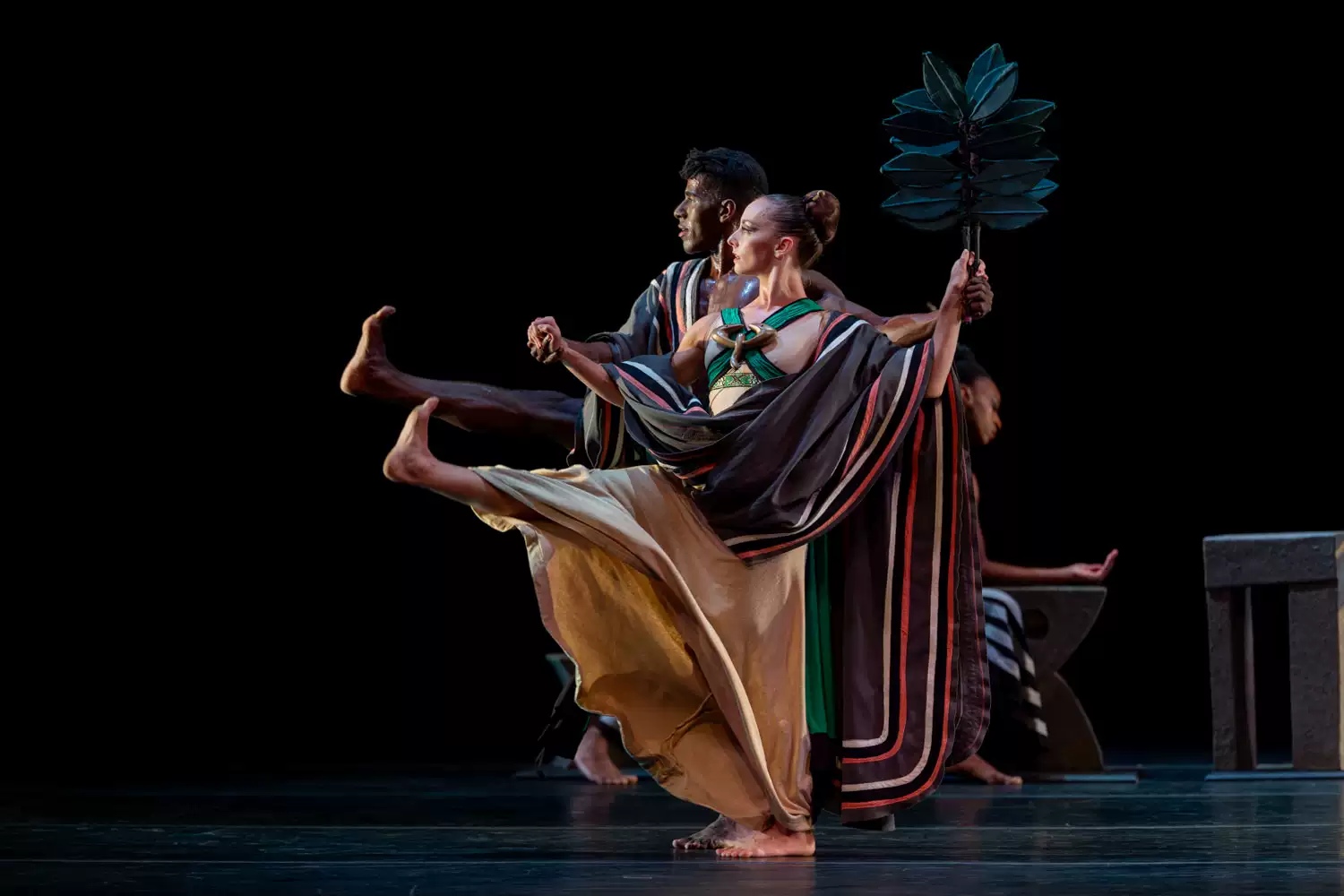
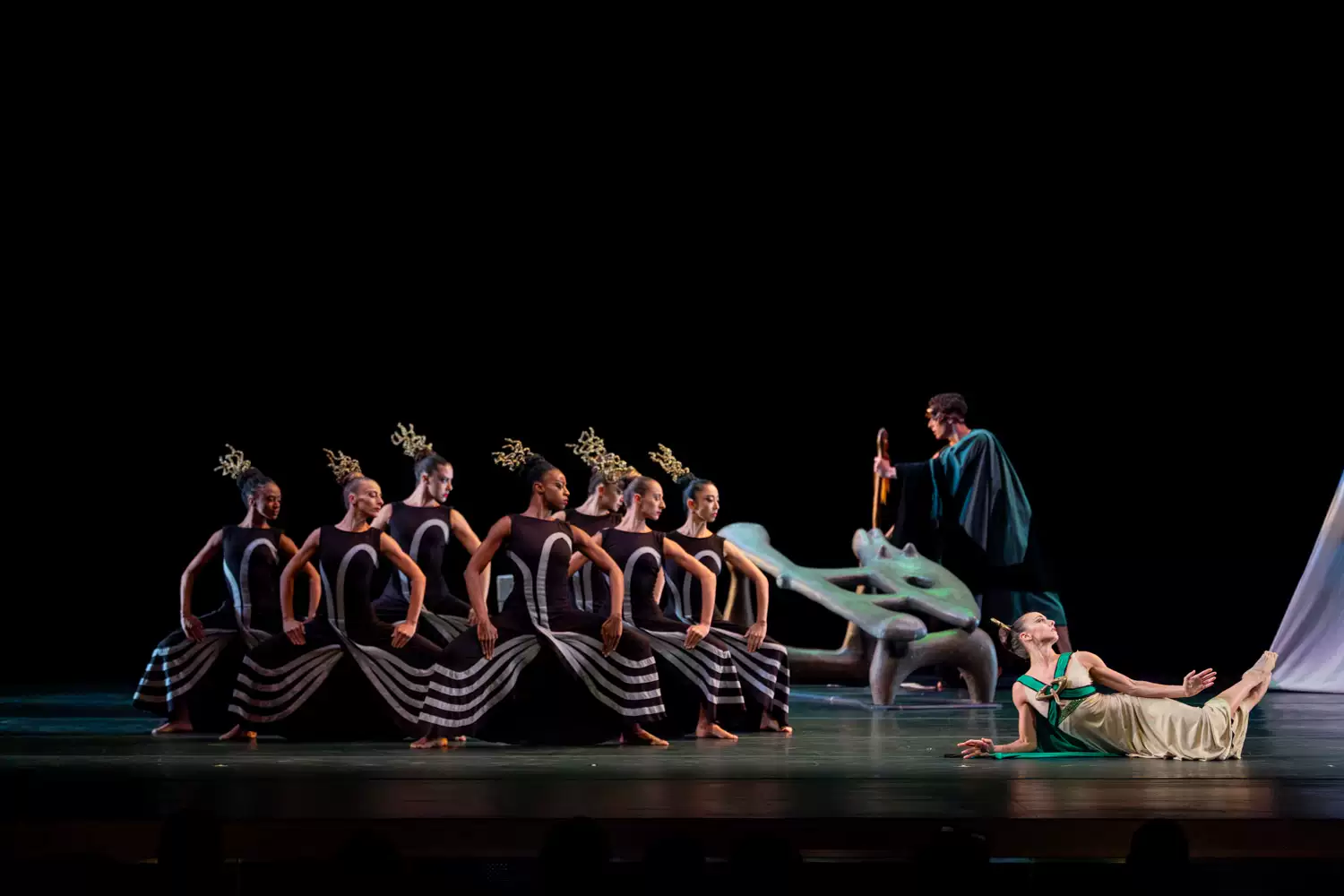
Night Journey was commissioned by the Elizabeth Sprague Coolidge Foundation and premiered in Cambridge, Massachusetts, as part of a Harvard University music criticism symposium. The work is one of Graham’s “Greek cycle” works. Like Cave of the Heart (1946), based on the myth of Medea, and Clytemnestra (1958), inspired by the Oresteia, Graham places women’s inner experience at the core of this work.
Lamentation Variations (2007)
Lamentation Variations premiered in 2007. Martha Graham Dance Company invited three choreographers to watch footage of Graham’s classic solo Lamentation and create an improvisatory choreographic vignette based on their own responses. The premiere received an enthusiastic response from audiences, and Lamentation Variations gradually developed into an ongoing creative project of the company. To date, the company has commissioned fifteen different versions of “variations.” This performance features versions by choreographers Aszure Barton, Doug Varone, and Larry Keigwin.
To the Brink and Back (2026)
Choreographer Jamar Roberts was invited to create a new solo for a principal dancer of Martha Graham Dance Company. The dancer enters slowly along a diagonal in dim lighting. As the music rises, the dancer twists the torso, balances on one leg, turns, and lunges. The dance and score then play backward, and the ending returns to the opening music as the dancer moves in reverse, retreating to the entrance point. The choreographer annotates the work thus: “It is the introspective power of transformation, contained within unwavering commitment,” paying tribute to the dancer’s long career deeply rooted in the Graham system.
Chronicle (1936)
Chronicle premiered on December 20, 1936, at the Guild Theatre in New York City. The score was composed by Wallingford Riegger. The original dance work was forty minutes long and divided into “Dance Before Catastrophe: 1914 and Masque,” “Dance After Catastrophe: Steps in the Street and Tragic Holiday,” and “Prelude to Action.” From 1937 onward, Chronicle disappeared from the regular repertoire and was once considered lost. In the 1980s, Martha Graham Dance Company revived 1914, Steps in the Street, and Prelude to Action and incorporated them into its current repertoire.
Martha Graham
Martha Graham is recognized, alongside Picasso, James Joyce, Stravinsky, and Frank Lloyd Wright, as one of the most influential artistic pioneers of the 20th century.
Time magazine named her “Dancer of the Century,” and People magazine listed her as one of the “Women Icons of the Century.” As a choreographer, her work was both prolific and complex. She created 181 dances in her lifetime and pioneered a dance system comparable to ballet in scale and influence. Her explorations of dance and theater thoroughly revolutionized the art form, and her innovative physical language has had an undeniable impact on dance worldwide.
Because of its diversity and breadth, Martha Graham’s extraordinary artistic legacy is often mentioned alongside the Moscow Stanislavsky Art Theatre and the Grand Kabuki Theatre of Japan. Her artistic legacy is carried on through the Martha Graham Dance Company and the students of the Martha Graham School.
In 1926, Martha Graham founded her own company and dance school while living and working in a small rehearsal studio in Carnegie Hall in Midtown Manhattan. In developing her dance technique, she continually explored the fundamental laws of human movement. Starting from the most basic “contraction and release,” she built a unique dance language intended to “enhance the emotional expressiveness of the dancer’s body,” revealing the deepest forces of human emotion through sharp, angular, tense, and direct movements. Martha Graham’s vision completely transformed the dance world and continues to inspire generations of dance and theater artists.
Martha Graham’s creative inspirations were extremely wide-ranging, including modern painting, the American pioneer spirit of the West, Native American religious rituals, and ancient Greek mythology. Many important roles in her dances were drawn from great female figures in history and myth, such as Clytemnestra, Jocasta, Medea, Phaedra, Joan of Arc, and Emily Dickinson.
As an artist, Martha Graham conceived each new work as a whole—including dance, costumes, and music. Over a 70-year choreographic career, Martha Graham collaborated with numerous artists, including sculptor Isamu Noguchi; actor and director John Houseman; fashion designers Halston, Donna Karan, and Calvin Klein; and renowned composers Copland, Barber, Louis Horst, William Schuman, Carlos Surinach, Norman Dello Joio, and Gian Carlo Menotti. Her company nurtured many future modern choreographers, including Merce Cunningham, Paul Taylor, and Twyla Tharp. She also created roles tailored for classical ballet stars such as Margot Fonteyn, Rudolf Nureyev, and Mikhail Baryshnikov, inviting them to join her company as guest artists. While teaching movement and dance at the Neighborhood Playhouse, she instructed actors including Bette Davis, Kirk Douglas, Madonna, Liza Minnelli, Gregory Peck, Tony Randall, Anne Jackson, and Joanne Woodward, teaching them how to use the body as a performance tool.
Martha Graham’s distinctly American artistic vision and extraordinary creative talent earned her many honors: in 1959, the Laurel Leaf Award from the American Composers Alliance; in 1976, U.S. President Gerald Ford awarded her the Presidential Medal of Freedom, the highest civilian honor in the United States, making her the first dancer and choreographer to receive it; Ford called her “a national treasure”; in 1985, she received presidential honors again when President Reagan presented her with one of the first National Medals of Arts; in 1986, colleagues in the theater world from Local One of the International Alliance of Theatrical Stage Employees unanimously selected her to receive the Centennial Dance Award, which would not be awarded again for the next 100 years.
Martha Graham Dance Company
Martha Graham and her company continue to expand the movement vocabulary of modern dance and deepen its intellectual and emotional resonance by placing works in contemporary social, psychological, and gender contexts, breaking the boundaries of the art form.
Martha Graham Dance Company has always been a fertile ground for experimentation and innovation, playing an important role in nurturing many of the leading choreographers and dancers of the 20th and 21st centuries, including Merce Cunningham, Anna Sokolow, Erick Hawkins, Pearl Lang, Sir Robert Cohan, Donald McKayle, Elisa Monte, Jacqulyn Buglisi, Paul Taylor, and many other outstanding talents.
Graham’s 181 works have also attracted world-renowned artists to perform them, including ballet stars Mikhail Baryshnikov, Margot Fonteyn, Rudolf Nureyev, and Maya Plisetskaya, as well as renowned actors Claire Bloom, Liza Minnelli, Kathleen Turner, and others. With pioneering technique and a distinctive style, Martha Graham Dance Company has won acclaim from audiences in more than 50 countries and regions across North America, South America, Europe, Africa, Asia, and the Middle East.
Today, the company continues Graham’s innovative spirit.
The company is pursuing a new programming vision, presenting both Graham’s classic masterpieces and new commissioned works by contemporary artists inspired by Graham. By integrating works by choreographers from different eras into rich, profound historical and thematic narratives, the company is actively committed to building a new platform for contemporary dance and offering audiences diverse ways to engage.
The company has announced the second season of “GRAHAM100,” a three-season celebration planned to commemorate Graham and the company’s legacy.
The 2024-25 season is themed “Dance of the Mind,” focusing on Graham’s psychological works, multifaceted female characters, and her long artistic collaboration with renowned visual artist Isamu Noguchi.
Other GRAHAM100 projects include a collaboration with Long Beach Opera in the United States, a documentary co-prepared with PBS, and a photography book by NYC Dance Project featuring rare historical photographs of the company over the past 100 years.
Martha Graham Dance Company has performed at the Metropolitan Opera House in New York, Carnegie Hall, the Paris Opera, the Royal Opera House in Covent Garden, London, and the Kennedy Center, and has also performed at the foot of the Egyptian pyramids and at the Odeon of Herodes Atticus at the Acropolis in Athens.
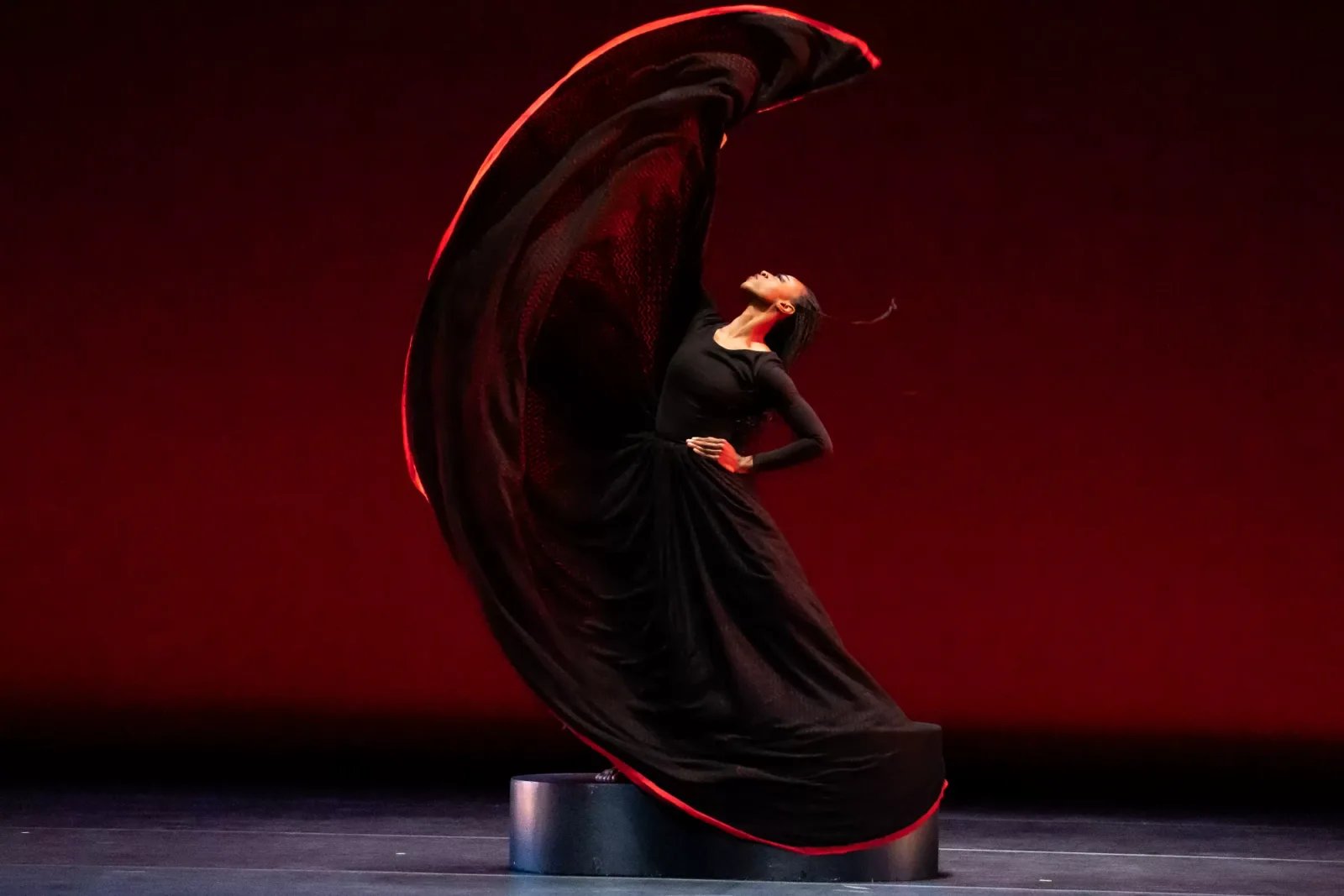
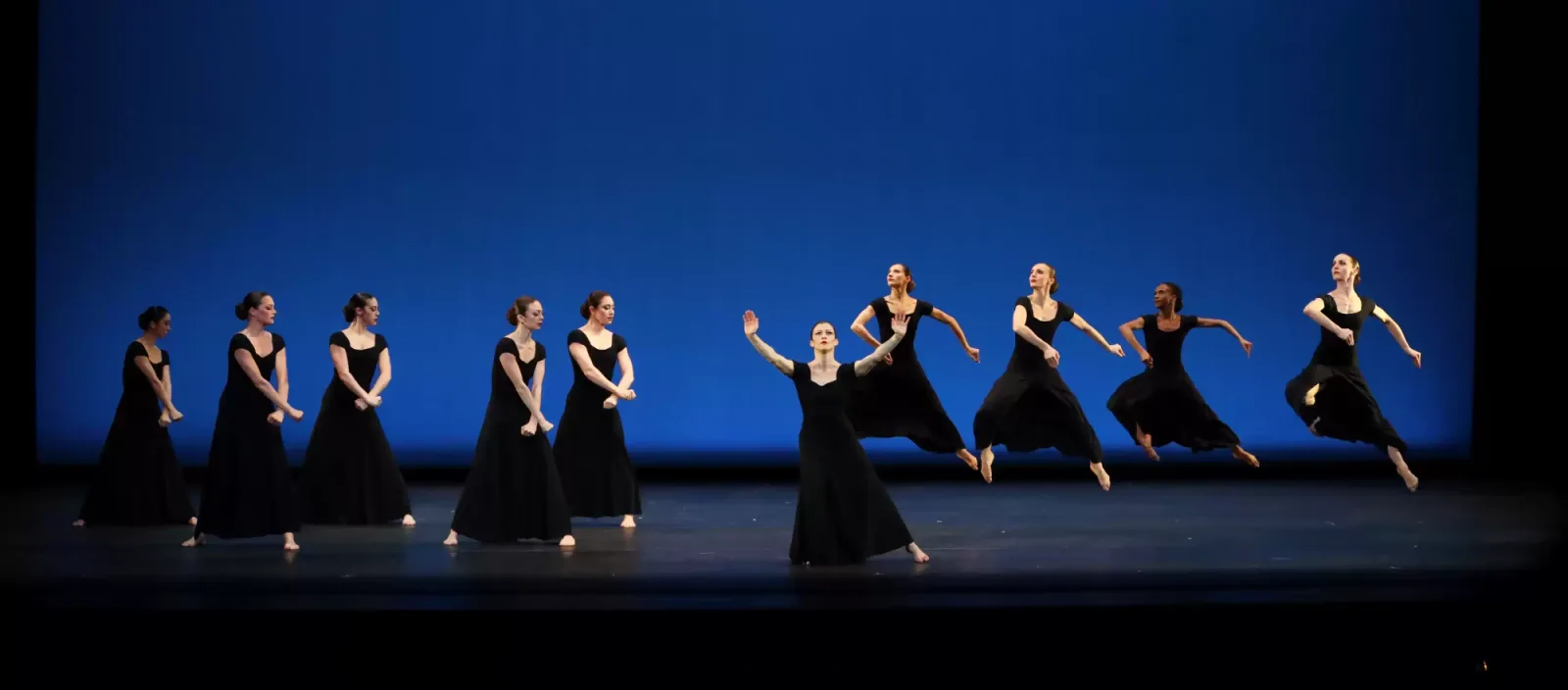
*Production stills are from past performances; actual performances shall prevail.
*Production stills photography © Steven Pisano, Luis Luque, Melissa Sherwood